48. Building a Thriving People-Centric Workplace: In Practice with Karina Patel (part 1)
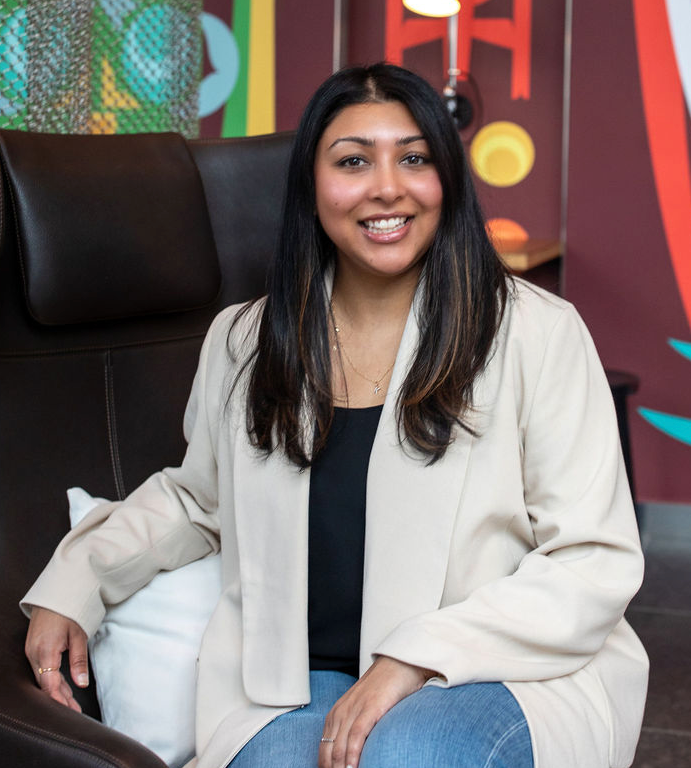
Karina Patel
Episode Summary
How do you turn a bold, feminist vision into a thriving, people-centered company that supports millions of women? In Part 1 of this two-part conversation, host Ellen Whitlock Baker sits down with Karina Patel, Chief Operating Officer at Her First 100K (HFK). Together, they explore what it looks like to dismantle toxic productivity, build intentional workplace systems, and re-architect traditional business norms to put human beings first.
Karina shares her journey from corporate marketing and non-profit development to leading behind-the-scenes operations alongside HFK founder and CEO, Tori Dunlap. She offers a transparent look into how she balances visionary ambition with operational reality—proving that a company can be both wildly successful AND center the humanity of its employees.
Ellen and Karina dive deep into HFK’s progressive HR policies, detailing the mechanics of truly supportive, human-first culture. From unlimited PTO (including menstrual and birthday leave) and four months of fully paid parental leave to remote work stipends and 26 company-wide paid days off each year, Karina breaks down why trusting employees with autonomy, setting firm communication boundaries, and unlearning the guilt of taking time off are essential for sustainable growth.
If you’ve ever wondered whether it’s actually possible to build a workplace that centers the needs of your employees and still be a raging success, this is a must-listen.
Show Notes
Find Karina Patel onLinkedIn
Learn more aboutHer First 100K
Listen to theFinancial Feminist podcast or get the NY Times Bestsellingbook
Learn more about HFK's100K Club
In This Episode, You'll Learn:
Turning Vision into Operations: How a COO translates visionary ideas into sustainable, executable operational strategies.
Deprioritization as Burnout Prevention: Why learning to say "no" or "not right now" protects team bandwidth and combats toxic productivity.
Rethinking Unlimited PTO: The nuance behind HFK’s unlimited leave policy, including menstrual leave, birthday leave, and reasonable coverage plans.
Radical Company-Wide Breaks: How HFK implements a full week off every quarter plus holiday downtime—giving the team 26 paid, company-wide days off each year.
Leadership Modeling & Communication Boundaries: Why leaders must model offline behavior, shut off notifications at 5:00 PM, and decouple urgency from importance.
Unlearning Work Guilt: Overcoming the myth that everything hinges on your constant presence, and realizing that healthy organizations run smoothly when you step away.
Transcript:
Ellen Whitlock Baker (00:00)
Hello everyone and welcome back to another episode of the Hard at Work podcast. Today I am joined by the amazing Karina Patel, who is the COO of Her First 100K, which is a totally badass company and I cannot wait to get into it with her. But hi Karina, how are you today?
Karina Patel (00:20)
Hi Ellen, thank you for having me. I'm doing great.
Ellen Whitlock Baker (00:23)
Karina is here to tell her story and prove to y'all that it actually does and can work to center your workers as humans first. Karina, first, before we get into all that, tell us a little bit about yourself and how you found yourself in this line of work.
Karina Patel (00:37)
My background has always been in marketing. I spent years building my career in corporate. I started in hospitality and then in corporate retail and then most recently as a CMO at a commercial real estate company. So in 2018, I co-founded a non-profit centered around community and mentorship for young women. And that experience gave me my first real taste of COO work, building structure, designing systems, translating vision into operations. And I met Tori at our nonprofit launch event that same year. And at the end of the night, she shared that she was turning her platform into her first 100K. And the goal was helping women become financially literate. And I remember being completely in awe of her clarity and her mission because financial education did not have a significant presence on social media at that time. So fast forward to 2021, she approached me. HFK was really taking off. It was rapidly growing. And when I looked at what she was building, I could immediately see the short-term and long-term potential and the needs of my role. So it felt like a
Ellen Whitlock Baker (01:59)
Mm-hmm.
Karina Patel (01:59)
natural next step. It was a new chapter for me. It also felt very organic in the impactful work I wanted to move into. And it was, I just, I was able to say yes without hesitation because it was something that I could care about. And I knew that even from behind the scenes, I was still doing good work. And so today as COO at HFK, I am the architect behind, building and managing our team, designing our HR policies that influence our culture, and then also making sure the systems and the infrastructure we have in place is set up correctly so that our mission can scale sustainably.
Ellen Whitlock Baker (02:50)
You said something that really stuck with me, which was turning vision into operations.
Karina Patel (02:55)
I mean, yes, essentially, yes, we're taking what we're, know, kind of the core of everything that we have built has been what didn't work?
Ellen Whitlock Baker (03:05)
Hmm
Karina Patel (03:08)
was irrelevant? What was, or, you know, quite frankly, what was outdated?
Ellen Whitlock Baker (03:14)
Mm-hmm.
Karina Patel (03:15)
And what was...for lack of a better word, wrong in traditional
Ellen Whitlock Baker (03:20)
Yeah, yeah.
Karina Patel (03:21)
work environments. And it was just, could we do differently? And so,
Ellen Whitlock Baker (03:24)
Nothing. They're great. Just kidding. Yeah. Yeah.
Karina Patel (03:29)
it's taking this vision that Tori has this like, these are the things that we are going to build. This is what we wanna do, who we wanna impact. And my job is to be able to take that vision and make it something sustainable and that we can execute within the timeframe and the resources that we have. And I often, joke saying that I feel like my role is the fun police because,
Ellen Whitlock Baker (03:57)
Yeah
Karina Patel (03:59)
know, CEOs are visionaries. They live up in the clouds. And my job is to be on the ground and pull the, know, like, hey, okay, this is great, but let's figure out how we're gonna do this. there are times where it's like, no, we can't do this, but often it's, we can do this, but here are the things we need to consider. Here's what we're gonna have to prioritize or shuffle around.
Ellen Whitlock Baker (04:23)
Mm-hmm.
Karina Patel (04:26)
so yes, I do consider myself the fun police sometimes, because people come at leadership calls, we come into meetings and they're like, these are all these ideas I have. And I'm like, I love them, but.
Ellen Whitlock Baker (04:38)
But you're so necessary. Like it's such a necessary role and like the genesis of burnout and all of these things that we're feeling and all of the statistics that show workplaces are suffering right now is because we're working too much. And a lot of that is because we can't say no, or we don't know how to say no. Or I loved that you said de-prioritize because you can totally do that, but our brains think that we can't, that we have to be busy all the time, that we have to go, you know, just like 110 miles an hour. So how,
Karina Patel (05:15)
Yes.
Ellen Whitlock Baker (05:16)
how did you like, we talked a little bit about unlearning right before we started recording, like tell me a little bit
Karina Patel (05:21)
Yes.
Ellen Whitlock Baker (05:21)
about how you unlearned some of that toxic productivity and got yourself and your mind to actually change, to be willing to consider pausing or deprioritizing or actually analyzing whether you should do something or not and not just going for it.
Karina Patel (05:37)
Yes, I'll start at the beginning to give you some context. coming from, I say traditional work environment, coming from corporate, coming from that environment, especially as an elder millennial, it has been, you know, ingrained in us that your value is based on, you know, FaceTime, it's based on the you figure it out, you do it. You're only escalating up if you've exhausted all of your options, your resources, you've done
Ellen Whitlock Baker (06:16)
Hmm.
Karina Patel (06:16)
your research, you've asked all the questions, you've gone to perhaps other departments to figure it out. And only then are you going up and saying, hey, here's the wall I'm hitting and this is where I need some guidance. And I think that at the very beginning when Tory and I sat down and we were like, okay, how are we going to build out our policies? What's important? Some decisions were easier, right? was everything has to kind of draw a line back to our values. we're inherently a feminist company, I mean, in our name and in, you know, the podcast being a financial feminist, it's
Ellen Whitlock Baker (06:49)
Yeah, you are.
Karina Patel (06:52)
everything we do is tied to feminism. We don't have to scream it from the mountaintops, but as we have continuously shared stories on the podcast and in the work we were doing, everything is tied back to money. And so we were like, what is easy to first change? So our values and how we role model them, the communication norms. Again, we had to look at what wasn't working, what did we want to do differently, just also how we treat one another. So I think the policies that required more research, the ones that we needed legal guidance on, those were the ones that made the biggest impact. An example is our paid leave policy. It's unlimited. Now, there is a lot of controversy over whether or not a policy should be unlimited or accrued. And I think it's an important conversation, but there's nuance to it. And our paid leave policy is unlimited, meaning that it includes vacation, health, part of health is menstrual leave. And we also have, you know, like a birthday leave. And when we say unlimited, we mean it. That also, you know, comes with common sense parameters.
Ellen Whitlock Baker (08:02)
Mm-hmm.
Karina Patel (08:03)
so if you're sick for a day or two, just, you know, we use gusto as our, as our platform, HR platform, just log into gusto, just let your manager know. But let's say you're, offline for five consecutive days, maybe because you’re sick at that point, we may ask for a doctor's note, just so that we have something that we have on file or, it could be you're taking a vacation that is longer than five days. What we ask is you just work with your manager so that there is a coverage plan. We just need to make sure that there is support to continue the work in your absence. More often than not, we plan around it. Our podcast team, if...team members are going to be offline. We're like, okay, if the producer's offline, we're gonna make sure that we are recording episodes days when we kind of batch them around that schedule. Or if our audio engineer is going to be offline, we work around those schedules and more often than not, they're flexible enough, we can plan ahead. If Tori is going to be offline for a month, we plan around that. We are proof that people can manage their schedules. We do
Ellen Whitlock Baker (09:13)
Yes.
Karina Patel (09:14)
not need to micromanage. I think that everyone should have been able to see that work really well during, um, in 2020.
Ellen Whitlock Baker (09:23)
Mm-hmm.
Karina Patel (09:23)
Um, we can work from home. Um, yes, there are days when we want some FaceTime with our team members. We will all meet at the coworking space that we work out of and, um, we'll have some time.
Ellen Whitlock Baker (09:36)
They're fully remote, by the way.
Karina Patel (09:38)
We are fully remote. Yes, we are
Ellen Whitlock Baker (09:40)
It works.
Karina Patel (09:43)
fully remote team. one of our other policies is for our employees, we offer a home equipment stipend. So it allows for people to work from home and be supported while working from home.
Ellen Whitlock Baker (09:56)
Comfortably. Yeah, yeah, yeah.
Karina Patel (09:59)
It's really more about what you're delivering as opposed to like when and where you're doing your work. We
Ellen Whitlock Baker (10:04)
Yes, yeah.
Karina Patel (10:06)
are a business, our business hours are Monday through Friday, nine to five. And there are some roles that are, customer facing or partner facing. so they, team members do those particular, roles, have to work within that timeframe. But our marketing team, for example, they consist of, they're all contractors. They have very specific roles like video editing or email marketing. And so those hours are not constricted or contained within just business hours.
Ellen Whitlock Baker (10:39)
Mm-hmm. Mm-hmm.
Karina Patel (10:39)
so work is flexible. I tell the team, if you're offline, you're for an hour, we generally just block your calendar. You're going to the gym. You have a therapy appointment. You're going for a walk.
Ellen Whitlock Baker (10:49)
Mm-hmm. Mm-hmm. Picking up your kid from school, like...
Karina Patel (10:55)
Yes, we have parents on our team and they're like, you know, they just block their times when they have, you know, we have a team member who now Thursday mornings is swim. That that flexibility has, we don't, there isn't anyone that if you're gonna be offline for a doctor's appointment or a dentist, like you don't need to ask for permission to schedule your
Ellen Whitlock Baker (11:15)
Mm-hmm.
Karina Patel (11:15)
doctor appointment, your dentist appointment or your, I wanna go touch grass and you know.
Ellen Whitlock Baker (11:22)
Mm-hmm.
Karina Patel (11:23)
It's okay. Just put it on the calendar. Let us know if there is a meeting maybe that you're going to be missing. Just let somebody know like, hey, I'm going to be offline because of this appointment that I have and
Ellen Whitlock Baker (11:34)
Mm-hmm. Mm-hmm.
Karina Patel (11:36)
here are my notes or hey, just, you know, I'll, we have action items, there's an AI summary that goes out with action items. And so people are able to catch up and look, it's on them for them, you know, to be able to take their own notes. And if they have questions, they can ask questions at the end. yeah, flexibility and remote work work really well. And some of our other policies that took a little bit longer because there was a lot of conversations happening with our legal team because we needed some guidance on what was required. another example is paid parental leave. We
Ellen Whitlock Baker (12:14)
Mm-hmm.
Karina Patel (12:15)
offer four months of fully paid parental leave and you don't accrue it.
Ellen Whitlock Baker (12:20)
amazing.
Karina Patel (12:20)
we offer it upfront as a whole. And
Ellen Whitlock Baker (12:23)
Amazing.
Karina Patel (12:24)
the processing getting there, we looked at companies like Bumble and Apple. I vividly remember this day and know, Bumble was offering six months. I cannot actually remember what Apple was offering at the time, but we were, Tori and I, we were honest about where we were as a company at that time. Three months held too short. Six months wasn't feasible yet. So four months
Ellen Whitlock Baker (12:45)
Yeah.
Karina Patel (12:49)
was that the right middle ground. And that doesn't even, so that doesn't include the one week off we have per quarter. So,
Ellen Whitlock Baker (13:01)
Yeah, no, just like explain that for a second, because that is, they don't break because of this, everyone. So anyway, tell them what it is.
Karina Patel (13:08)
Yes, okay. So let me tell you what it is and how we even started it. So we have 26 company-wide breaks per year. And it's structured as a full week off each quarter. And then during the holidays between December and that first week of January when we all come back online,
Ellen Whitlock Baker (13:26)
that week, yeah.
Karina Patel (13:29)
generally we get about 10 days off during the holiday time. So it's more than one full week. Nevertheless, you get a week off per quarter and it is fully paid. Employees do not have to use paid leave to use that one week off. And if you were on parental leave, then it's not going to come out of the 16 weeks that you already have.
Ellen Whitlock Baker (13:54)
my gosh, wow.
Karina Patel (13:55)
you're wondering, how did we even start having one quarter off? Well, it started out of necessity. Back in 2022, Tori had a book, Financial Feminist, coming out and it launched December
Ellen Whitlock Baker (14:07)
Great book.
Karina Patel (14:07)
27th in 2022. So the team couldn't fully step away for the holidays. And so we committed to really taking a break in February of 2023. And the reason why we had to wait till February was because if anyone who has ever launched a book, you know, the first month from launch date is really busy with press interviews, with author events, the book tour, whether interviews are virtual or in person. And so we were firing on all cylinders.
Ellen Whitlock Baker (14:46)
Mm-hmm. Mm-hmm.
Karina Patel (14:48)
So we said, okay, we'll take a break and when we came back, We weren't playing catch up with one another. We were all aligned.
Ellen Whitlock Baker (14:55)
Hmm
Karina Patel (14:57)
It was the break that we needed and we were ready to move on and that experience shaped everything that followed. were like, we should have a spring break in May.
Ellen Whitlock Baker (15:07)
Mm-hmm, mm-hmm.
Karina Patel (15:08)
we should have a summer break at the end of July. And so, yeah, it's a very much needed week off,
Ellen Whitlock Baker (15:13)
Mm-hmm.
Karina Patel (15:14)
and we're able to come back and we're refreshed, everyone's kind of catching up at the same pace because often, you know, when you, when you're off and you come back and you're like, okay, now I'm catching up what happened and then someone else is taking off. now this is also on top of paid leave. So people are able to still take their vacations
Ellen Whitlock Baker (15:34)
amazing.
Karina Patel (15:35)
or their days off whenever they need. It works.
Ellen Whitlock Baker (15:37)
And there's this lack of guilt I'm hearing because I just a couple of observations that quarterly leave when the entire company is off, what a delight because then when you come back, you don't have 500 emails that you've missed or meetings you have to catch up on or whatever, often that's what happens in other workplaces, especially with
Karina Patel (15:59)
Yes.
Ellen Whitlock Baker (15:59)
like, yeah, go take your vacation, but come back and your work has doubled because there's no
Karina Patel (16:05)
Yeah.
Ellen Whitlock Baker (16:05)
thought of what to do. It still exists, which is of counter to the point. So I love that. And I love what I'm hearing. And I guess I want to know the truth. it sounds like you can take days or weeks or whatever off, and you're not going to check in on email or on your texts or whatever. And that to still feel like you're tied to the office. Are you all pretty good about that?
Karina Patel (16:32)
Yes, I will say for example, if I am going to take more than a week off, for any time I'm out of office, I will, in the description of the calendar invite, because I have to let the entire team know that I'm offline,
Ellen Whitlock Baker (16:43)
Yeah, sure.
Karina Patel (16:44)
I will let them know if I am laptop slack free for that trip.
Ellen Whitlock Baker (16:48)
Awesome.
Karina Patel (16:50)
And yes, for that trip, I am. Now, there have been a few instances where leadership can text me, where something may have come up and it was like, hey,
Ellen Whitlock Baker (17:02) happens. Yeah.
Karina Patel (17:03)
it happens. And they know, and I'm OK with that. You can text me. But it is after they have gone through the resources, they have gone to the right person to ask questions and, there are times when I'm like, Hey, I'm going to be offline, but I'll say on this particular day, I actually am going to be checking email kind of on and off all day. So if you need something, slack me during this time. So
Ellen Whitlock Baker (17:24)
Awesome.
Karina Patel (17:25)
it might be something where I might be on vacation and it might, or, you know, I might be in transit traveling. And so I'm like, this day I can check email and I'm available if you have a question. we are, especially Tory and I, we are specific in writing like, hey, I'm no communication happening during this time. And that I would say is limited to just myself, Tory and our brand director. But everyone else, we say when you're offline, you're offline. You don't need to be checking emails, even during our week off. We've done a really good job of letting our audience, our community know that we need breaks. If you message us over the weekend, we'll get back to you when we come back online on Monday or Tuesday.
Ellen Whitlock Baker (18:06)
Mm-hmm. Mm-hmm.
Karina Patel (18:08)
We all also are taking our weekend to rest. So we communicate that with them every time that quarterly, the break is coming up. We communicate with all of our third parties, know, hey, we're gonna be offline next week. If you have questions, let us know now, otherwise we'll get back to you when we're back. And you know, we're not checking email. So as long as we are communicating and letting people know we're offline, emails are going unanswered. I remind everybody and we, you know, especially when I'm talking to in interviews our coming out of interviews, people are asking about, you know, the boundaries we set in place because we are a remote team and how we communicate on Slack and, someone messages you in a different time zone or after hours. I'm like, we what the work we do is important, but it is not urgent. We are we are
Ellen Whitlock Baker (19:00)
Mm-hmm.
Karina Patel (19:01)
not we are not performing surgery. We
Ellen Whitlock Baker (19:05)
Mm-hmm. Mm-hmm.
Karina Patel (19:06)
if it's 8 p.m. on a Tuesday night and you see a message come through, I tell people turn off your slack notifications. Mine is set to 5 p.m. As soon as 5
Ellen Whitlock Baker (19:16)
Mm-hmm.
Karina Patel (19:17)
p.m. hits, I'm no longer receiving notifications. I will see them all in the morning. And it
Ellen Whitlock Baker (19:19)
Ugh, bless. Yeah.
Karina Patel (19:22)
Now, of course, if something is time sensitive, usually I get a text if something critical is happening. Yeah, yeah. And and
Ellen Whitlock Baker (19:28)
Everybody knows your number. That's the thing. It's like, just text me if it's like the world's on fire, but otherwise.
Karina Patel (19:33)
I think in all of the times, in the four and a half years I have been with H of K, I think the texts that I am receiving is something like, hi, this campaign starts tomorrow and the contract hasn't been signed yet.
Ellen Whitlock Baker (19:48)
Mm-hmm.
Karina Patel (19:49)
it's something that is more like business operations related as opposed to, know, hey, where did you file this document? I can't find it.
Ellen Whitlock Baker (19:59)
Yeah, yeah, totally. It's something that's necessary. And I think that's what's funny is like, I've talked about it on here before, but it's almost like we have this rampant perfectionism. So we even want to be perfect in how we're disassociating from work. And it's so funny because it's not that you can never, ever, ever hear from work or never, ever, ever check email. It's that it shouldn't be your habit every night.
Karina Patel (20:25)
Yes.
Ellen Whitlock Baker (20:25)
and every vacation and every, and I love the concept of like, if you're going to be gone a long time, build in that day if you want to.
Karina Patel (20:32)
Yes.
Ellen Whitlock Baker (20:33)
it sounds like you don't have to, but if you want to, you can build in that day to just kind of be online and answer questions. All of that is fabulous. Like
Karina Patel (20:40)
Yeah.
Ellen Whitlock Baker (20:41)
as a coach, I'm not going to tell you that's bad. I, what I will tell you is bad is having your notifications on like 24 hours a day, because you're going to get that hit of adrenaline every time you see it. And, know,
Karina Patel (20:54)
Yes.
Ellen Whitlock Baker (20:54)
Karina is a COO of a pretty big company and even she turns her notifications off everyone. So you can do it too. And like what I'm hearing also is you as the leaders are modeling the behavior that you want your employees to have. Because what we know is that if you tell your employees, don't eat my after work, don't do slack, whatever, but you do it, they will do it because they feel like that's what it takes to succeed. But it sounds like you guys model it. And so it's much easier
Karina Patel (21:25)
Yes.
Ellen Whitlock Baker (21:25)
to then not do it yourself when the COO is not doing it.
Karina Patel (21:29)
Yes. Ellen, is what I was, this is, okay. Earlier you mentioned earlier
Ellen Whitlock Baker (21:34)
I got you fired up. I love it.
Karina Patel (21:36)
you mentioned unlearning. So
Ellen Whitlock Baker (21:38)
Mm-hmm.
Karina Patel (21:39)
there are times when I still do this, when I'm like, I am going to be offline for this day or I'm going to be offline for x number of hours because I'm in transit if you need me though you can reach me via slack or you know like I will I will sometimes I'm like no if I'm offline or if I'm in transit or if I've already you know put it on the calendar I don't need to tell somebody I am still accessible and it is a it is this four and a half years of unlearning
Ellen Whitlock Baker (22:12)
Mm-hmm.
Karina Patel (22:13)
what we thought was, you know, like I said, there are things that we were, that were drilled into us were professional. And while
Ellen Whitlock Baker (22:21)
Yeah.
Karina Patel (22:22)
some things are true, a lot of it is just what we were, we, just saw and what we were told. And, and so there are in our day to day, things that we have to be role models for and that whether that is in how we communicate, whether that is in how we take time off. And part of why we thought, you know, when somebody has especially unlimited PTO, I think with accrued, we find that people feel like, I've accrued this and if I don't use it, will, it may not carry over, I might lose it. And what we found was with unlimited, there are some team members that still are taking minimal amount of time off. So we wanted people
Ellen Whitlock Baker (23:04)
Mm-hmm.
Karina Patel (23:05)
to see that like, you you can take off a week and things are running just fine. And I,
Ellen Whitlock Baker (23:12)
Mm-hmm.
Karina Patel (23:13)
you know, I think I was maybe, I think it took me until my early thirties to realize like things don't fall apart without in my absence. Like it is not that. no.
Ellen Whitlock Baker (23:21)
Yeah, exactly. You're not that important. Like, you're amazing. But none of us are that important. And if you are, you're micromanaging, I guarantee you.
Karina Patel (23:29)
No, the company runs just fine without me. know, in my twenties, I was a director of marketing and I put the role that I played within the company was just like everything hinged upon my presence or my direction or leadership.
Ellen Whitlock Baker (23:44)
Mm-hmm.
Karina Patel (23:46)
I felt guilty for even taking a day off and
Ellen Whitlock Baker (23:49)
Yeah, that's so common.
Karina Patel (23:51)
yes. And, you know, knowing like, okay, I'm going to work extra hours when I come back because I need to make up for it. And then moving into, my previous company, their policy was a lot better in that, you accrued, but you were also given a set number of weeks. and so time off was encouraged and I didn't feel, I didn't feel bad if I was taking time off to go and not really reframed how I viewed time off. And I stopped feeling guilty
Ellen Whitlock Baker (24:18)
Mm-hmm. Mm-hmm.
Karina Patel (24:20)
and I stopped worrying about having to be online for work when I was offline. And that did help me. And then, you when I came to HFK, it was like, okay, so now how can we do this better?